


Poultry News
  • Production
    • Broiler Production
    • Ducks
    • Egg Production
    • Game
    • Hatching
    • Housing
    • Turkeys
  • Processing
  • Business & Politics
    • Business
    • Economics
    • EU & Politics
    • Marketing
    • People
    • Training & Education
  • Welfare
    • Environment
    • Food Safety
    • Vet & Medication
    • Welfare
  • Feed
  • Genetics
  • New Products
  • Magazines
    • December 2025
    • November 2025
    • October 2025
    • September 2025
    • 2025 Buildings supplement
    • August 2025
    • 2025 Poultry Health supplement
    • July 2025
    • 2025 National Egg and Poultry Awards finalists supplement
    • June 2025
    • 2025 Innovation supplement
    • May 2025
    • April 2025
    • March 2025
    • 2025 Feed and Nutrition supplement
    • February 2025
    • January 2025
    • December 2024
    • November 2024
    • October 2024
    • September 2024
    • 2024 Building for the Future supplement
    • August 2024
    • 2024 Poultry Health supplement
    • July 2024
    • 2024 National Egg and Poultry Awards finalists supplement
    • June 2024
    • 2024 Innovation supplement
    • Pig & Poultry Fair 2024
    • May 2024
    • April 2024
    • March 2024
    • February 2024
    • January 2024
    • December 2023
    • November 2023
    • Processing Equipment Supplement – Nov 2023
    • October 2023
    • Building Supplement – Sept 2023
    • September 2023
  • Jobs
    • Browse Jobs
    • Post a Job
    • Manage Jobs
  • Events
    • National Egg and Poultry Awards
    • Poultry Fair
    • Webinars
Twitter LinkedIn
  • FREE Email Newsletters
  • About Us
  • Advertise
  • Subscribe
  • Contact Us
Twitter LinkedIn
Podcast
Poultry News
  • Production
    • Broiler Production
    • Ducks
    • Egg Production
    • Game
    • Hatching
    • Housing
    • Turkeys
  • Processing
  • Business & Politics
    • Business
    • Economics
    • EU & Politics
    • Marketing
    • People
    • Training & Education
  • Welfare
    • Environment
    • Food Safety
    • Vet & Medication
    • Welfare
  • Feed
  • Genetics
  • New Products
  • Magazines
    1. December 2025
    2. November 2025
    3. October 2025
    4. September 2025
    5. 2025 Buildings supplement
    6. August 2025
    7. 2025 Poultry Health supplement
    8. July 2025
    9. 2025 National Egg and Poultry Awards finalists supplement
    10. June 2025
    11. 2025 Innovation supplement
    12. May 2025
    13. April 2025
    14. March 2025
    15. 2025 Feed and Nutrition supplement
    16. February 2025
    17. January 2025
    18. December 2024
    19. November 2024
    20. October 2024
    21. September 2024
    22. 2024 Building for the Future supplement
    23. August 2024
    24. 2024 Poultry Health supplement
    25. July 2024
    26. 2024 National Egg and Poultry Awards finalists supplement
    27. June 2024
    28. 2024 Innovation supplement
    29. Pig & Poultry Fair 2024
    30. May 2024
    31. April 2024
    32. March 2024
    33. February 2024
    34. January 2024
    35. December 2023
    36. November 2023
    37. Processing Equipment Supplement – Nov 2023
    38. October 2023
    39. Building Supplement – Sept 2023
    40. September 2023
    Featured

    Poultry Business – December 2025 issue out now

    By Chloe RyanDecember 8, 2025
    Recent

    Poultry Business – December 2025 issue out now

    December 8, 2025

    Poultry Business – November 2025 issue out now

    November 9, 2025

    Poultry Business – October 2025 issue out now

    October 13, 2025
  • Jobs
    • Browse Jobs
    • Post a Job
    • Manage Jobs
  • Events
    • National Egg and Poultry Awards
    • Poultry Fair
    • Webinars
Twitter LinkedIn
Poultry News
Genetics

Edinburgh scientists transfer climate-tolerant feathers to British chickens

Chloe RyanBy Chloe RyanFebruary 1, 20213 Mins Read
Facebook Twitter LinkedIn Email
Share
Facebook Twitter LinkedIn Email

Sterile male and female chicken eggs have been implanted with reproductive cells from donor birds and the resulting chickens mated together, to produce chicks of the donor breed.

The chicks showed characteristics inherited from their real parents, the donor birds, along with the edited change to their DNA, rather than their surrogate parents.

The outcome, using gene editing, demonstrates an efficient way to introduce beneficial characteristics – such as tolerance for warm climates, or disease resistance – from one chicken breed to another.

The application of this technology could bring benefits to the global poultry industry – from large scale commercial operations to smallholder farmers in low- and middle-income countries.

Beneficial genes can be transferred from one breed into another via gene editing of embryos, in a single generation.

The approach could also help safeguard rare chicken breeds, by storing frozen reproductive cells.

The method to control the reproductive genes carried by both parents – known as Sire Dam Surrogate mating – can ensure that offspring will inherit a desired gene from both parents, and exhibit the characteristic associated with that gene.

A team from the Centre for Tropical Livestock Genetics and Health (CTLGH) and the Roslin Institute, with their commercial partner Cobb-Europe, demonstrated their approach by using sterile male and female chickens, known as empty nest chickens, to transfer feather characteristics between breeds.

The team removed reproductive stem cells – early stage cells that later develop into sperm and eggs – from chicken embryos using gene-editing technology, and used the same technology to introduce gene-edits into these reproductive cells from another breed.

The altered reproductive cells were then implanted into surrogate parents – the embryos of chicks and cockerels that were bred to be sterile. These surrogates were hatched and mated with one another.

The resulting offspring were of the donor breed, and not that of their surrogate parents. They also had the new traits created by gene-editing technology.

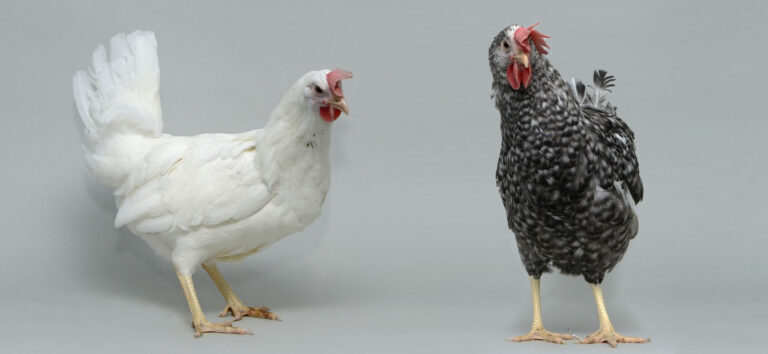
Researchers demonstrated their approach by repairing a natural genetic change that causes distinctive white plumage in the White Leghorn breed. The chicks born to the sterile chickens now had a black plumage.

The study was published in Nature Communications, and research carried out at the National Avian Research Facility at the Roslin Institute. The work was funded by the Bill & Melinda Gates Foundation and the UK Foreign, Commonwealth and Development Office through CTLGH, as well as UKRI and Innovate UK.

Share. Facebook Twitter LinkedIn Email
Previous ArticleEFRA Committee launches urgent inquiry into Brexit border delays for meat
Next Article Avara Foods’ annual sales and profits rise, despite £5.8m of cost of closing duck business
Chloe Ryan

Editor of Poultry Business, Chloe has spent the past decade writing about the food industry from farming, through manufacturing, retail and foodservice. When not working, dog walking and reading biographies are her favourite hobbies.

Read Similar Stories

News

Grounded Research launches study on poultry food safety, seeks industry participants

December 4, 20251 Min Read
Feed & Nutrition

Addressing misconceptions about probiotics allows poultry producers to unlock significant performance benefits

November 19, 20253 Mins Read
News

Chippindale Foods to offer Avian Influenza help

November 18, 20252 Mins Read
Latest News

Introducing Will Raw, new NFU poultry board chair

December 12, 2025

Comment: Egg consumption is higher than ever

December 12, 2025

Comment: Keep on top of your litter this winter

December 11, 2025
Sponsored Content

Stay one step ahead of outbreaks

December 3, 2025

Can Aviance improve production and shell quality in full laying cycle?

October 1, 2025
© 2024 MA Agriculture Ltd, a Mark Allen Group company

Privacy Policy | Cookies Policy | Terms & Conditions

  • Farmers Weekly
  • AA Farmer
  • Farm Contractor
  • Pig World

Type above and press Enter to search. Press Esc to cancel.